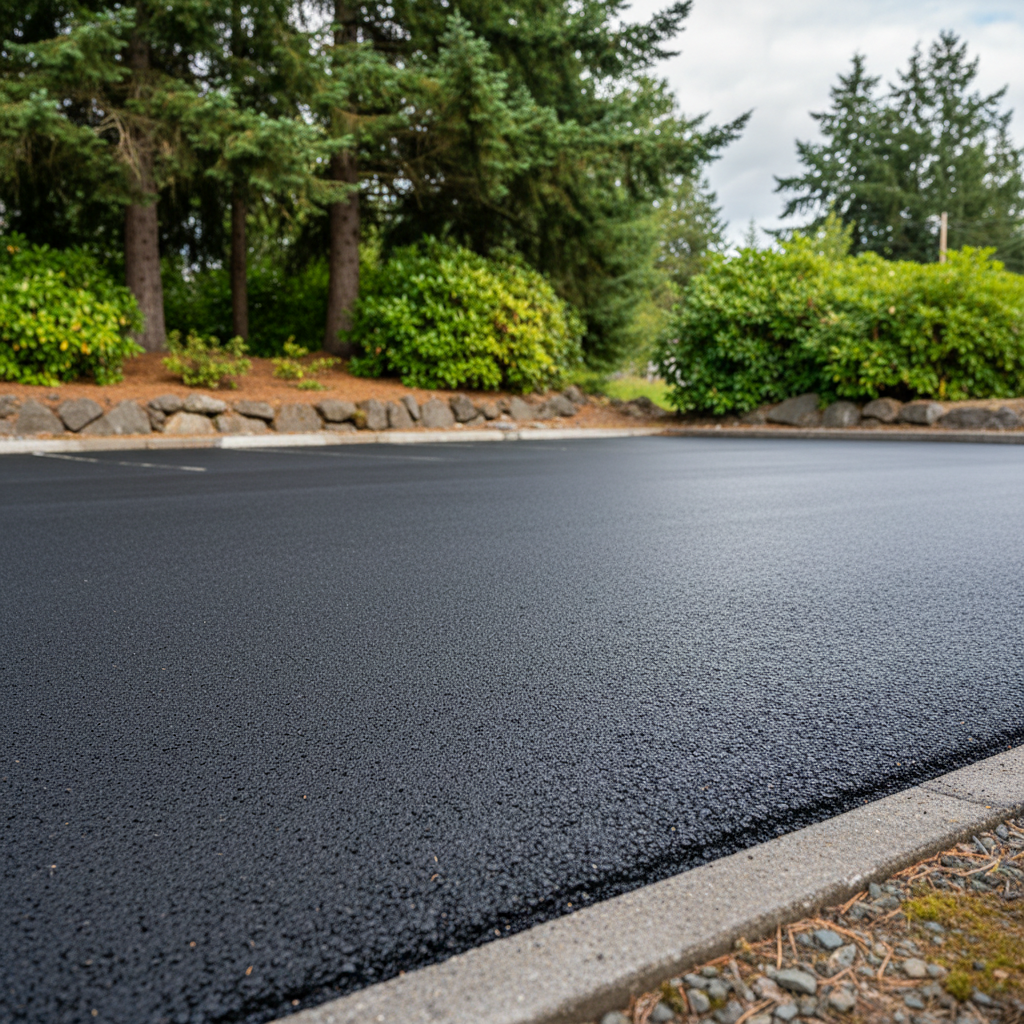
Running a local business or managing property around Clark County means keeping your exterior looking sharp, and that usually starts with the pavement. Over the years at Horizon Asphalt Solutions, we have heard just about every question regarding commercial and multi-family parking lot paving. We want to clear up what you actually need to know before laying down hot mix asphalt in our specific Pacific Northwest climate.
How long does a commercial parking lot paving project take?
People always want a quick timeline so they can minimize disruptions for tenants or customers. For an average-sized commercial lot, the actual Commercial Parking Lot Paving part might only take one to three days. But you have to factor in the total scope. Site grading, sub-base compaction, and tear-out of old, failing asphalt can add another week depending on what we find underneath. If we are dealing with the wet clay soils common around the Salmon Creek or Orchards areas, getting the foundation right takes time because rushing sub-base prep leads to premature rutting.
When is the best time of year to pave in Vancouver, WA?
Weather dictates everything in this trade. We live in a region notorious for relentless autumn and winter rains. Asphalt needs dry weather and warm ground temperatures to compact properly and achieve the right density. Horizon Asphalt Solutions typically schedules major parking lot paving between late May and early September. During these dry summer months, the ambient heat helps keep the asphalt hot long enough for our rollers to lock it in tight. Trying to pave a commercial lot in January when temperatures hover near freezing and standing water fills every pothole is a recipe for failure.
What causes premature cracking and potholes in local lots?
Water is enemy number one. Vancouver gets hammered with heavy seasonal rainfall, and if your parking lot lacks proper slope and catch basins, that water has nowhere to go. It sits on the surface, finds microscopic cracks, seeps down into the sub-base, and softens the foundation. When delivery trucks or heavy SUVs drive over saturated sub-grades, the asphalt flexes and breaks apart. Poor initial compaction and skimping on total asphalt thickness also play a huge role in how fast a parking lot deteriorates under traffic weight.
How thick should a commercial parking lot be?
You cannot pave a commercial lot like a residential driveway. Residential paths might get away with two inches of compacted asphalt, but a commercial parking lot handling delivery trucks, garbage trucks, and daily customer traffic needs a solid structure. Horizon Asphalt Solutions usually recommends a compacted thickness of at least three to four inches of hot mix asphalt laid over a heavily compacted crushed aggregate base of six inches or more. Skimping on thickness to save a few dollars upfront will cost you thousands in early repairs.
How soon can vehicles drive on the new asphalt?
Freshly laid asphalt is hot and pliable when we finish rolling it. We generally tell property owners to keep all regular passenger vehicle traffic off the new lot for at least 24 to 48 hours. Heavy trucks need to stay off for a minimum of 72 hours, sometimes longer if the weather stays unusually warm and the mix takes extra time to cure fully. If you let delivery trucks park on fresh asphalt too early, you will see deep wheel ruts and gouges that ruin the smooth finish instantly.
Do I need permits for parking lot paving in Vancouver?
Yes, municipal rules apply. If you are doing a complete overhaul, changing the drainage patterns, or expanding the footprint of an existing commercial parking lot within city limits or Clark County jurisdiction, you will need proper permits and engineered site plans. Minor surface overlays or routine maintenance like sealcoating usually do not trigger heavy permitting, but structural Commercial Parking Lot Paving certainly does. For Vancouver homes and businesses, Horizon Asphalt Solutions helps make sure every project meets local code compliance before work begins.