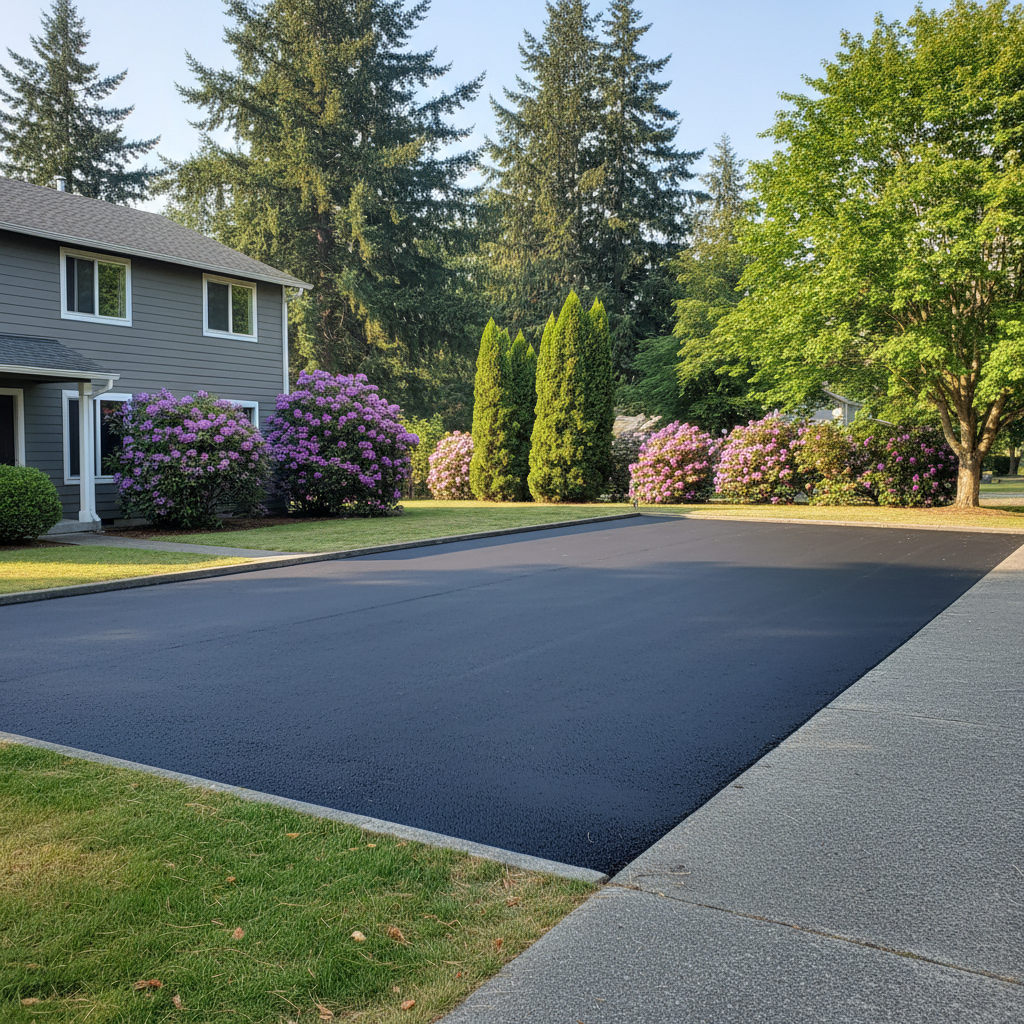
So, you're thinking about a new parking lot, or maybe repaving an old one, for your business right here in Vancouver. It's a pretty big investment, no two ways about it. And if you're like most folks, your first thought is probably, "How much is this actually going to cost me?" You won't find any vague answers from me; I'm going to give you the real deal on what to expect when you're looking at parking lot paving costs.
What Makes the Price Go Up or Down?
A lot of different things factor into the final price of a parking lot. It's not just a simple rate per square foot, even though that's a decent place to start. Think of it like building a house — there's a ton happening behind the scenes you don't necessarily see, but it's super important.
- Size and Scope: This one's pretty obvious, right? A small lot for a duplex over in the Hough neighborhood will be totally different from a huge lot for a retail center out near Cascade Park. Bigger area means more material and more crew, naturally.
- Existing Conditions: Is this a brand-new lot on untouched ground? Or are we ripping out an old, crumbling asphalt lot? Demolishing and hauling away old material definitely adds to the cost. If the sub-base (that's the dirt and gravel underneath) isn't stable, especially with our wet Vancouver winters and clay soils, we'll need to do extra work like grading, compacting, and maybe even adding more aggregate. All that bumps up the price.
- Asphalt Thickness: Most commercial parking lots need at least 2-3 inches of compacted asphalt for light to medium traffic. If you've got heavy trucks, like at a distribution center, you might need 4 inches or more. More asphalt means more material and more passes with the paver, simple as that.
- Drainage: Good drainage is absolutely essential here in the Pacific Northwest. You don't want standing water turning into potholes or, worse, ice sheets. This often means carefully grading the lot, putting in catch basins, and connecting to stormwater systems. This can be a major cost, but honestly, it's non-negotiable if you want your lot to last.
- Access and Logistics: Can our trucks and equipment easily get in and out of your site? Tight spots or busy areas that need traffic control can add to labor costs because, well, it slows us down.
- Striping and Markings: Once the asphalt is laid, you'll need lines, arrows, handicap symbols, and fire lanes. This is usually a separate line item, but it's crucial for a lot that actually works.
Typical Cost Ranges in Vancouver, WA
Alright, let's get down to actual numbers. Keep in mind these are just averages, and every single project is unique. But this should give you a good idea of what to expect.
- New Construction (from scratch): If we're building a parking lot from the ground up, including excavation, preparing the base, and laying 2-3 inches of asphalt, you're generally looking at $4.50 to $8.00 per square foot. This covers all the dirt work, aggregate base, and the asphalt itself. For a 10,000 sq ft lot, that's $45,000 to $80,000.
- Overlay (paving over existing asphalt): If your current lot is in decent shape but just needs a fresh surface, an overlay of 1.5-2 inches can run you $2.50 to $4.00 per square foot. This assumes the existing base is solid and we only need to do minor patching beforehand. A 10,000 sq ft lot would be $25,000 to $40,000.
- Remove and Replace: This is the most involved and expensive option. We're tearing out the old, failed asphalt, fixing the base underneath, and then putting down brand new asphalt. This can range from $6.00 to $10.00+ per square foot, depending a lot on how much base repair is actually needed. That same 10,000 sq ft lot could easily be $60,000 to $100,000 or even more.
Just remember, these numbers usually don't include things like extensive drainage systems beyond basic grading, fancy curbing, or landscaping. Striping is often quoted separately, usually around $0.25-$0.50 per linear foot for standard lines.
What's in a Horizon Asphalt Solutions Quote?
When you get a quote from us, or really any good contractor, it should be super clear what you're paying for. Here's what you'll usually see:
- Site Preparation: This covers everything from clearing debris, digging, grading, and compacting the subgrade.
- Base Material: The type and thickness of the aggregate base (crushed rock) we plan on using.
- Asphalt Paving: This includes the asphalt material itself, getting it to the site, spreading it, and compacting it. We'll tell you the thickness in compacted inches.
- Labor and Equipment: The cost of our crew and all the heavy machinery needed to get the job done right.
- Cleanup and Hauling: Removing any debris or old asphalt from your site.
- Traffic Control: If it's needed for safety during the project.
Things that are often separate or optional include striping, sealcoating (which, by the way, I always recommend for making your new asphalt last longer), curbing, and installing extensive drainage systems.
How to Avoid Overpaying
Nobody wants to get ripped off, especially on a big project like a parking lot. Here's my best advice:
- Get Multiple Bids: Don't just go with the first person you talk to. Get at least three detailed quotes. This helps you compare apples to apples and really understand the going rate.
- Check References and Reviews: See what other businesses in Vancouver are saying about their work. A good contractor will have a solid track record, you know?
- Understand the Scope: Make sure each bid clearly spells out what's included. One bid might look cheaper, but it could be for less asphalt thickness or skip crucial base work. Ask questions, seriously!
- Don't Just Chase the Lowest Price: The cheapest bid isn't always the best deal. Sometimes it means corners are cut, and that'll cost you more in repairs later on. You want quality work that actually lasts.
- Ask About Warranties: A reputable company like Horizon Asphalt Solutions will stand behind their work. Ask about their warranty on both materials and labor.
Paving a parking lot is a pretty big deal for your business's curb appeal and how well it functions. Do your homework, ask the right questions, and you'll end up with a smooth, durable lot that serves you well for years.