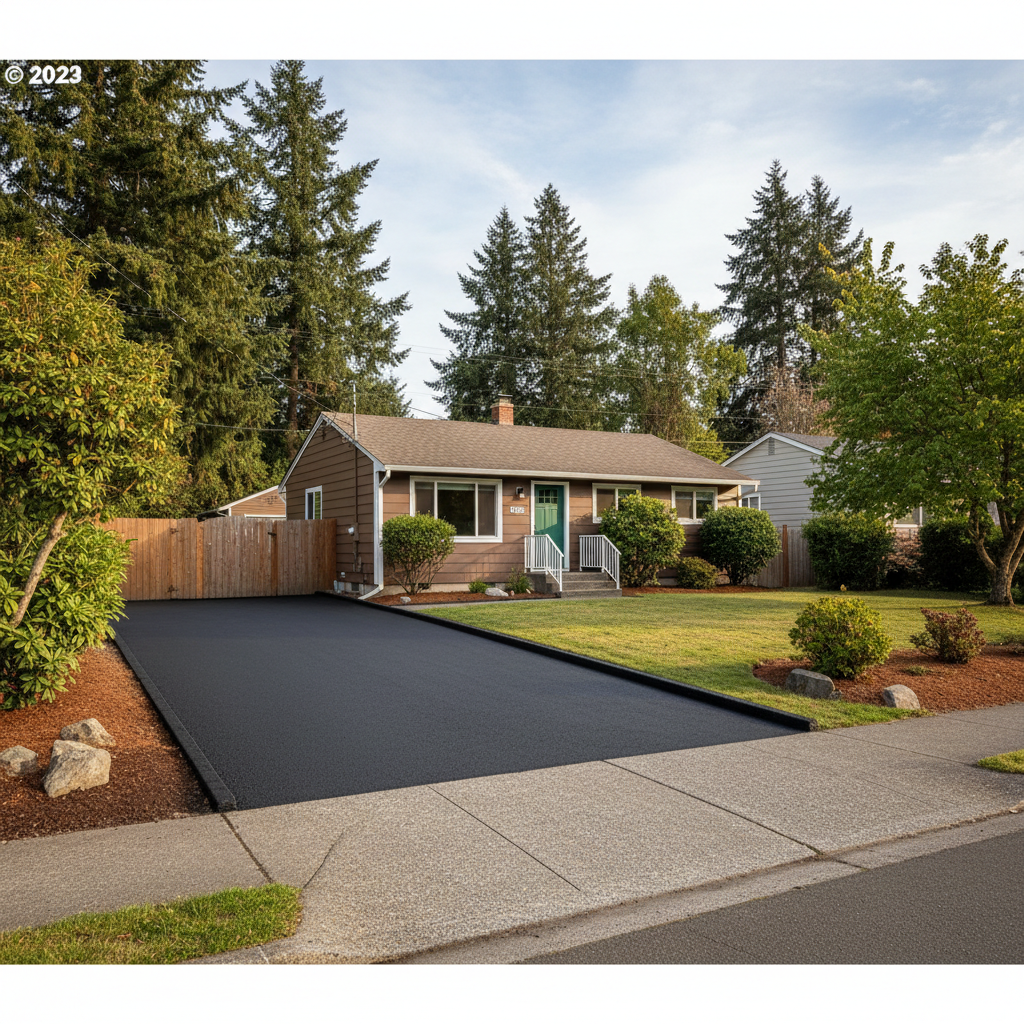
What's the Real Cost of a New Driveway Here in Vancouver?
So, you're probably wondering, "What's this whole driveway paving thing actually going to cost me?" It's not a simple answer, honestly, but I can give you some solid numbers and explain what makes those prices go up or down. I've been doing this for years around Vancouver, and I've truly seen it all – from small patches in older Felida homes to those big, sweeping driveways out in Ridgefield.
Look, a new asphalt driveway in our area typically runs anywhere from $3 to $7 per square foot. Yeah, I know that's a pretty wide range. But that's just for the asphalt itself and the basic installation. The total project cost, once you figure in everything else, usually lands somewhere between $5,000 for a small, simple 500 sq ft driveway and $20,000 or more for a large, complex 3,000 sq ft project. Most folks with an average two-car driveway, say 800-1,000 sq ft, are probably looking at something in the $7,000 to $12,000 range for a quality job. Just remember, these are general numbers; your specific situation will decide the final price tag, won't it?
What Makes the Price Tag Jump Around?
A few key things really push the price one way or another. You absolutely have to think about them when you're putting your budget together:
- Size and Shape: This one's a no-brainer, right? A bigger driveway means more material and more labor. Also, a really curvy or oddly shaped driveway just takes more time and skill than a straight rectangle, so that'll cost you a bit more per square foot.
- Existing Conditions: Is there an old driveway already there? If we have to tear out old concrete or asphalt, that's extra work and disposal fees. Now, if your current base is solid and just needs a good cleaning, hey, that saves you money. But if your ground is soft or has drainage issues – which is pretty common with our wet Vancouver winters and clay soils – we might need to do more extensive excavation and add a thicker, more stable base layer. That definitely adds to the cost.
- Material Thickness: A standard residential driveway usually gets 2-3 inches of asphalt on top of a good base. If you've got heavy vehicles, maybe an RV or a work truck, you might want 3-4 inches for extra durability. Thicker asphalt means more material, and yep, a higher price.
- Site Accessibility: Can our equipment easily get in and out? If it's a tight squeeze or a long haul from the street, that can add to labor time and, well, cost.
- Drainage Solutions: Good drainage is absolutely crucial here in the Pacific Northwest. If your property needs new culverts, catch basins, or grading work to direct water away from your home, that's an additional expense. But it's a necessary one if you want to protect your investment.
- Permits: Sometimes, especially for bigger projects or those that affect public rights-of-way, you'll need a permit from the city or county. We can help you figure that out, but the permit fees themselves are usually your responsibility.
What Should a Good Quote Include?
When you get a quote from a reputable company like Horizon Asphalt Solutions, it shouldn't just be a single number. You really need to see a breakdown. Here's what you should expect:
- Preparation Work: This covers excavation, grading, and compacting the sub-base. If there's old material to remove, that should be itemized separately.
- Base Material: The type and thickness of the aggregate base (like crushed rock) that goes under the asphalt.
- Asphalt Material & Installation: The specific type of asphalt mix, the thickness of the layers, and the square footage being paved.
- Drainage: Any work related to making sure water runs off properly, like sloping or installing new drainage features.
- Permits: If applicable, the cost of getting the necessary permits.
- Cleanup & Disposal: What happens to all the old material and debris? This should be included, too.
- Warranty: A good contractor will stand behind their work. Ask about their warranty on materials and labor, it's important.
How to Avoid Getting Ripped Off
Nobody wants to overpay. Here's my advice, plain and simple:
- Get Multiple Quotes: Don't just go with the first guy who gives you a number. Get at least three detailed quotes from different local contractors. This helps you compare apples to apples and really understand the market rate.
- Check References & Reviews: Look at online reviews, ask for local references, and check with the Better Business Bureau. A contractor with a solid track record is worth more than just a cheap price.
- Ask for a Detailed Contract: Make sure everything we just talked about is in writing. No verbal agreements for big jobs, ever. The contract should clearly outline the scope of work, materials, timeline, and payment schedule.
- Beware of Low-Ballers: If one quote is significantly lower than the others, be very cautious. They might be cutting corners on materials, labor, or not including everything you actually need. A super cheap price often means super cheap work, unfortunately.
- Don't Pay Upfront: A reputable contractor won't ask for the full payment upfront. A reasonable deposit (10-30%) is common, with the balance due once the work is satisfactorily completed.
Getting a new driveway is a big investment, sure, but it really adds both curb appeal and functionality to your home. Do your homework, ask the right questions, and you'll end up with a great result that lasts for years.